
Michelle’s journey: the right care at the right time
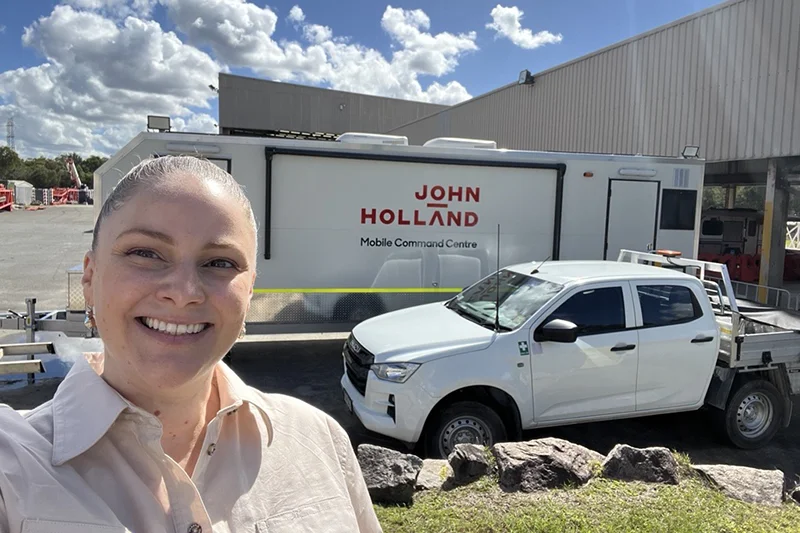
When Michelle boarded a flight home from an overseas trip, she had no idea her life was about to change dramatically. As a National Innovation Manager in the rail industry, Michelle was used to high-pressure environments and long hours. Like many in construction, health concerns often took a back seat. But worsening food intolerances and persistent pain signalled something wasn’t right.
Early action made all the difference
Michelle booked a GP appointment soon after returning home. Her doctor acted quickly, referring her to A/Professor Gregor Brown for a colonoscopy, endoscopy, and MRI. These tests revealed something far more serious than food sensitivities. A/Professor Gregor Brown referred Michelle immediately to Professor Andrew Metz, Director of the Jreissati Pancreatic Centre at Epworth for a biopsy via Endoscopic Ultrasound (EUS). Thanks to Professor Metz’s exceptional care and a prompt surgical referral, Michelle was scheduled for surgery without delay.
The operation was extensive - removing her gall bladder, spleen, and the tail of her pancreas. It confirmed the diagnosis: pancreatic cancer. While surgery was challenging and lonely, Michelle says nothing compares to the difficulties of chemotherapy.
The power of coordinated care
Michelle credits her survival to fast response and follow-up care. “If my symptoms hadn’t been taken seriously, the cancer would have progressed”, she reflects. Her company’s support and ability to pivot work tasks was a relief; however, the most invaluable support came from Lisa and Ana, the Specialist Pancreatic Nurses at Jreissati Pancreatic Centre.
“The nurses are key,” Michelle says. “When you’re facing brain fog and the extreme trauma of chemotherapy, you don’t have the energy to explain your treatment to your care givers and sometimes it’s easier to do the hospital visits on your own. Lisa supported and coordinated my care during my journey. I couldn’t imagine this journey without them.”
The reality of chemotherapy
By the eighth round of chemotherapy, Michelle describes feeling separation of body and mind. “Only now that my chemotherapy treatments are complete, I feel like my body belongs to me again,” she says. But the journey isn’t over. Neuropathy in her feet lingers, and wearing work boots on-site often triggers numbness and tingling up to her knees.
Michelle’s experience underscores the importance of early detection and GP education. A colleague, in the prime of her life, diagnosed around the same time wasn’t as fortunate - she passed away recently. “It’s a reminder of why programs like the GI for GPs symposium and diagnostic tools from the Centre are so critical,” Michelle says.
Finding strength in recovery
During treatment, Michelle faced another challenge - her primary support person suffered a heart attack, flipping her into support mode while battling cancer herself. “It was a wake-up call to take care of myself,” she says. Programs like Healing Holidays provided by the Centre gave her the space to recover and reconnect. “Having time for self-care makes me feel like myself again. Chemotherapy and the cancer journey disconnects you from life - it’s important to refocus.”
Michelle’s message
Her advice to anyone facing a potential diagnosis:
“Follow up and ensure you have coordinated care. The Jreissati Pancreatic Centre has been a life saver; I couldn’t be more grateful for the ongoing support and diligent care.”