Meet Hali, our APRISE Coordinator
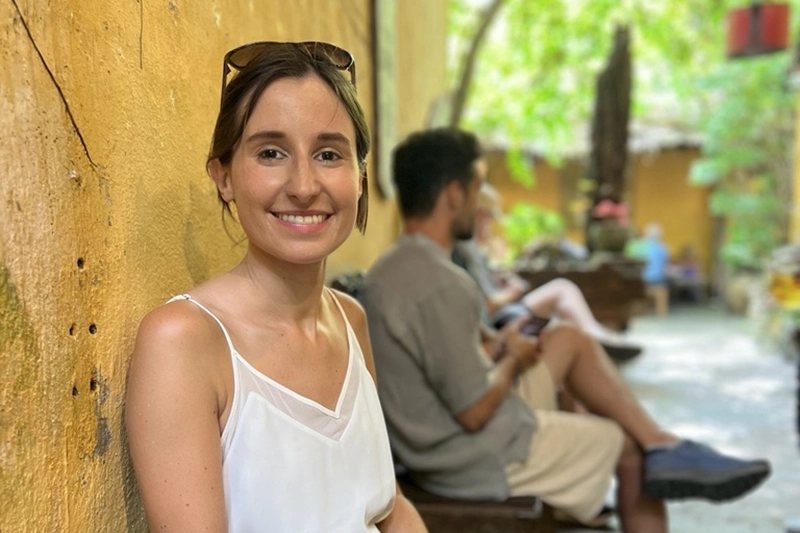
Almost everyone involved in the Australian Pancreatic Cancer High-Risk Screening (APRISE) program will have met our Clinical Research Coordinator, Halina Pietrzak. Hali joined the Jreissati Pancreatic Centre at Epworth in 2023 and took on the responsibility of overseeing the APRISE program in its developmental stages in 2024. We asked Hali about the program, her role in ensuring its continued success, and what she enjoys about her work.
What prompted you to join the Jreissati Pancreatic Centre at Epworth?
After completing my PhD in infectious diseases immunology, I was keen to expand my skills in a translational research environment - one where scientific discovery is directly applied to patient care. This provided a valuable opportunity for me to bridge the gap between research and practice, as well as engage more closely with patients- something I had not experienced previously in a laboratory-based role.
Can you describe your typical day? What are some of the operational requirements of the APRISE Program?
The APRISE program is a national initiative launched through the Jreissati Pancreatic Centre in 2025. As Lead Study Coordinator, I oversee the program’s daily operations, ensuring its many components run smoothly and efficiently. A significant part of the role involves comprehensive data management across multiple databases to coordinate patient consent, confirm eligibility, and facilitate referrals to over 30 screening sites across Australia. Collaboration is also central to the program’s success. I work closely with screening sites to support patient assessments and provide training. Each week, our team comes together to review progress, set priorities, and plan for both immediate and longer-term program goals.
How does your background in research and your PhD help you in your current role?
My background in immunology and medical biology has been valuable in supporting my transition into this role. It has enabled me to quickly interpret and synthesise complex information, as well as adapt to new areas of research with confidence. Completing a PhD also builds strong problem-solving and critical thinking skills. We frequently need to respond to emerging challenges and operational demands, and my research training has helped me to approach these situations methodically and to think creatively to find solutions.
What do you enjoy most about your work in the Centre?
Being part of the Jreissati Pancreatic Centre is incredibly rewarding. I particularly value the strong sense of teamwork and the opportunity to connect with a wide range of colleagues and collaborators. I’ve also had the privilege of meeting many patients through our clinical trials, whose experiences have had a lasting impact on my perspective. The breadth of work we undertake in the pancreatic space makes the Centre a dynamic and engaging place to work, with each day offering something meaningful and new.
What are you most looking forward to this year?
I was fortunate to receive an EMF scholarship to attend the PRECEDE (Pancreatic Early Detection Consortium) working group meeting in New York this October. This is an exciting opportunity to connect with international collaborators and learn from leading experts in pancreatic cancer early detection. Attending the meeting will also provide valuable insight into how the screening data we contribute through APRISE fits within a broader global effort to improve early detection and patient outcomes.
Tell us a little bit about yourself outside of work - what do you like to do?
I love cooking (huge Ottolenghi fan) and catching up with friends to eat, play tennis, go op shopping and catch the latest movies at Nova on Lygon. When I’m not travelling, you will find me at home, cooking something yummy for dinner, and curling up to enjoy a good book or west wing episode with my partner (Dim) and pup (Trotsky). In summer, I'll be at the beach for a swim after work.